


House of Rose is a company that handles everything from planning and development to sales of natural skincare and makeup cosmetics. It operates 180 directly managed stores and prides itself on face-to-face customer service, but customer information and points are managed individually at each store, creating a challenge: a lack of coordination between stores. To resolve this situation, the company decided to revamp its systems and implement Salesforce. Following a proposal from Sunbridge, the company's partner for system development and migration, the company adopted HULFT Square as data integration platform. By utilizing data, the company has successfully established a platform for deepening relationships with customers.
Customer Issues
We want to consolidate customer data that is scattered across stores and business systems, and develop a platform that can respond to changes.
Benefits of implementation

customer information,
Sales information, etc.
Consolidate into DWH
Between stores
share It is possible to

Aggregation and report creation
By being automated,
Manual counting and
Report creation
zero to

HULFT Square
It is also easy to maintain,
Leads to in-house production
environment Achieve
System renewal is essential to take advantage of the strengths of face-to-face customer service
Since opening its first store in 1978, House of Rose has continued to provide safe, hypoallergenic products using carefully selected plant-derived ingredients. Starting with its "hand wash," which allows customers to experience the feel of the products by using their hands as if they were their face, the company has built deep relationships with customers by emphasizing face-to-face customer service and communication. However, customer information was managed by each store, and there was a lack of coordination between stores, including points.
"Even regular customers were becoming 'first-time customers' at other stores. Information about the products they were using and their skin type was not shared, and they were unable to use the points they had accumulated. We received requests from customers for improvements," said Kuramoto.
After a period when the company was unable to take advantage of its strengths in face-to-face customer service due to the COVID-19 pandemic, it was essential to create a system that would allow customers to receive the same level of service at all stores in order to regain its strengths.However, while the existing mission-critical system, core system was based on a packaged product, it was customized from scratch, making it difficult to keep up with this change in strategy.
"The only way to respond quickly to the changing times is to fundamentally change the system. Our goal was to create a structure that uses strong systems and services for each purpose and links them together. We also wanted to create a system where data integration, conversion, and processing could be implemented using ETL tools, rather than developing them from scratch each time," says Kuramoto.
"HULFT Square" meets various requirements, including reliability, availability, and maintainability
First, they adopted Salesforce as their CRM to consolidate customer information. "We did a lot of research, but we concluded that Salesforce, with its extensive know-how, was the best choice for centralizing customer information and handling it as a data resource," says Kuramoto. "They have a proven track record in the industry, and we expect that the knowledge they have cultivated will be reflected in their services." Then, through an introduction from Salesforce, they came across Sunbridge. They provided specific proposals on how to maximize their capabilities, taking into account the overall path, schedule, and budget, and with complete confidence, they asked them to help with the implementation of Salesforce.
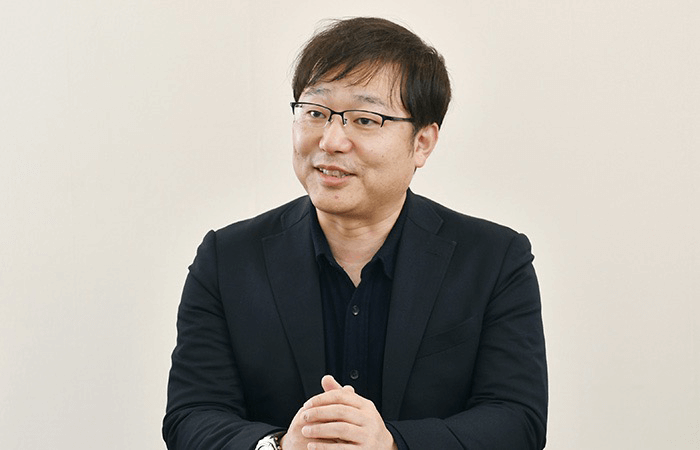
General Manager of Information Systems Department, Administration Headquarters
Mr. Tsuyoshi Kuramoto
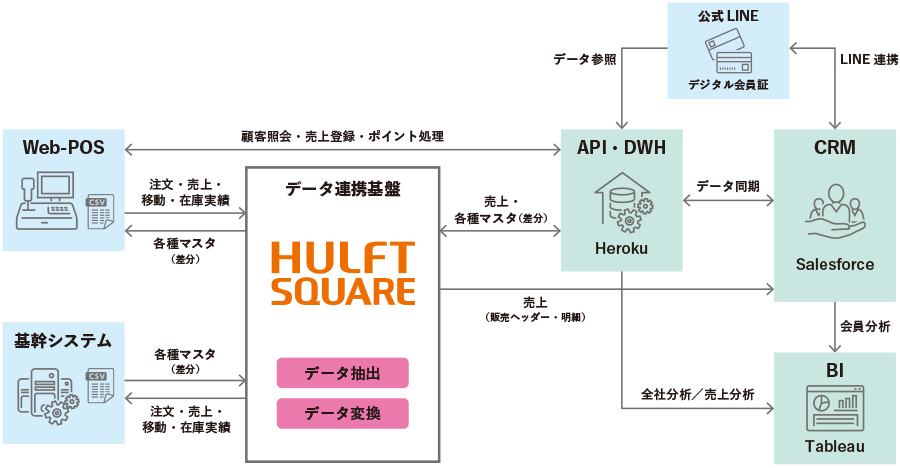
The overall system will consist of a new Salesforce (CRM), Heroku (DWH), and Tableau (BI), and will link data from the existing mission-critical system, core system and Web-POS. SunBridge proposed HULFT Square, an iPaaS from Japan, as the foundation for this data integration. SunBridge proposed HULFT, an iPaaS from Japan, as the foundation for . " is a brand with a proven track record, and the integration with Salesforce can be implemented in low code. In this case, we only use CSV files and data integration to Salesforce, but there are plenty of other integration connectors available for future expansion. I myself had experience using DataSpider in the past, and I was aware of how easy it was to develop, so I felt comfortable using a tool that was based on DataSpider (Togura).
"From the beginning, we wanted to use managed cloud services, including data integration tool rather than on-premise services. The proposal took into account the various requirements for tools, such as reliability, track record, maintainability, and availability. Since we trusted SunBridge, we decided to adopt HULFT Square without any hesitation," says Kuramoto.
Easy-to-use GUI flexibly handles complex mapping and overlapping changes
However, when it came to implementation, some aspects proved difficult. The existing system, which had been customized from scratch, made it difficult to analyze the data situation. In order to centralize customer information along with Web-POS data, the existing system had to be unraveled first.
"There are about 20 tables with a fairly large number of fields, and we had to map them all without any omissions. Mapping is relatively easy if you just connect mission-critical system, core system to the DWH one-to-one, but this time we also linked it to Web-POS. It's a small detail, but it took a lot of time to match the data types and number of digits one by one," says Masukura.

Management Headquarters, Information Systems Department, Information Systems Section
Hoshina Kawazu
The development period was about one year, which was too tight to proceed from scratch. Even after mapping was completed, the results sometimes differed from what was expected when the data was actually output. "Each time we found something wrong, such as an item that should have been added up not being included, we had to figure out what was wrong and correct it. We often noticed something only when the project was nearing completion, so we consulted with SunBridge and made adjustments," says Kawazu. Repeated adjustments like this meant that the number of conditions, such as "however, this should be omitted/added," kept increasing, so the process required constant revisions along the way to avoid making the project too complicated.
"HULFT Square allows you to see at a glance how the data is mapped and can flexibly accommodate changes like this. It's also easy to use when reviewing and organizing, which has been extremely helpful," said Masukura. The implementation and data migration on the Salesforce side also proceeded according to schedule, with the system being successfully released in August 2024.
Data is automatically linked, so you don't have to wait for it to be compiled and reported.
To be able to check the latest information
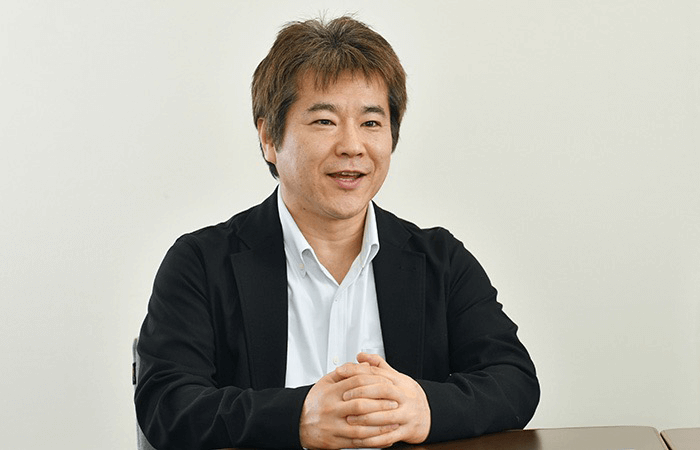
Cloud Integration Division
Strategic Account Group
Mr. Kenta Tokura
This development has created an environment where data can be linked and synchronized from mission-critical system, core system and Web-POS to Heroku and Salesforce. A Tableau dashboard has also been implemented to analyze and monitor this data. Point cards have also been migrated to LINE's digital membership cards. This transition has also gone smoothly, with approximately half of existing members already registered for digital membership cards.
"We have a two-stage process where sales information and points information from Web-POS are linked in real time using the DWH API, while final sales, inventory, master data, and other business data are linked in bulk overnight using HULFT Square," says Tokura.
This means that the latest information on customers, sales, etc. can be viewed from Salesforce, eliminating the need for tasks such as tallying and reporting, which had previously been done manually.
"We can easily search for the sales status of specific products in Salesforce. We can also check this information on the tablets provided to store managers, so we no longer have to wait for reports from the field. Employees have commented that things have become so much easier, and we feel that our operations have become closer to the systems of a typical retail business," says Kuramoto.
However, as this was the first system update in 20 years, there was much confusion immediately after its release, and it took time for store staff to get used to it. "Once they realized how convenient the new system was, such as being able to check sales from tablets, it spread smoothly. Six months after the introduction, they have become accustomed to using it, and from now on we will enter the phase of considering how to use the data to strengthen relationships with customers and increase sales. Each store has also asked, 'Is there anything we can do to improve this?', so I believe that the system will be able to demonstrate its true value in the future (Mr. Kuramoto)."
The ease of use of HULFT Square is also beneficial from the perspective of promoting in-house production
Furthermore, one of the design concepts for this project is the promotion of in-house development, with the aim of establishing a system in the future where data integration can also be done in-house. "This concept is also the basis for using data integration tool. Currently, we leave the operation and maintenance of HULFT Square to Sunbridge, but we would like to be able to handle these in-house as well. Compared to a full-scratch environment, HULFT Square can respond to changes more quickly, and I think we have made the necessary preparations to shift to in-house development," says Kuramoto.

Cloud Integration Division
Strategic Account Group
Kotono Masukura
HULFT Square can be implemented with low code using a GUI and visualizes data processing, making it easy to understand how data is linked and where problems are occurring. Once you get used to it, maintenance is also easy. "For example, recently we had a problem where the night-time batch was taking a long time and didn't finish within the expected time, but we were able to easily identify the process that was taking a long time from the log and quickly take action such as 'extracting part of the process and running it on a different schedule.' I think this kind of 'ease of use' has great benefits even when moving forward with in-house development," says Masukura.
Further advance data utilization, including sales support using machine learning
As people got used to the new system, the sales planning department began to raise requests for customer attraction campaigns that had not been anticipated in the original design, such as campaigns that utilize points. "The digital point campaigns were a request to utilize data that would lead to sales and customer attraction, which was the aim of the system renewal, so we are working with Sunbridge to somehow meet this demand. These types of responses will likely settle down once we have some experience with events and campaigns throughout the year. We would like to accumulate know-how and prepare the system so that we can respond by changing parameters," says Kuramoto.
Going forward, based on the basic information compiled this time, the company will consider how it can address skin concerns and how to utilize data and systems to build long-term relationships. In doing so, it will also consider utilizing machine learning to analyze and learn trends from sales data and other sources, aiming to create a system to support sales staff by suggesting products that are expected to be more effective. By dividing the system into functions and configuring it to combine services specialized in each field, it has become easier to implement new initiatives. HULFT Square will serve as the hub for this.
"We believe that new initiatives will be most effective if they are undertaken by people who understand the internal circumstances. HULFT Square is not only reliable, but also flexible and adaptable to change, and has the speed to initiate and realize projects. It also has a system that allows us to link services without compromising their strengths, making it a reliable tool for our company, which is aiming to bring development in-house," says Kuramoto.
First, they will move forward toward their goal with the support of SunBridge. "In-house development is important, but if you do it in a closed environment, you may end up pushing ahead with mistakes. Partners are important for consultation and advice, and I hope to continue building a good relationship for a long time to come," says Kuramoto.
House of Rose Co., Ltd.
- Head office address: 2-21-7 Akasaka, Minato-ku, Tokyo
- Founded: November 26, 1978
- Capital: 934,682,000 yen
- Number of employees: 969
- Business: Planning, development, and sales of cosmetics including skincare, makeup, and body care. Management of relaxation salons and women-only fitness salon "Curves."
Sunbridge Co., Ltd.
- Head office address: JR Ebisu Building 11F, 1-5-5 Ebisu Minami, Shibuya-ku, Tokyo
- Established: October 2012
- Capital: 95 million yen
- Business description: Implementation consulting, customization, and operational support for Salesforce and other SFA, CRM, MA, etc. Development and sales of SmartVisca, a Salesforce-integrated business card digitization service.
- The content of this case study is current as of the time of the interview. The content of this case study may change without notice.